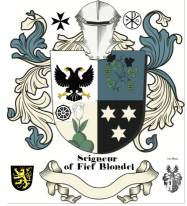
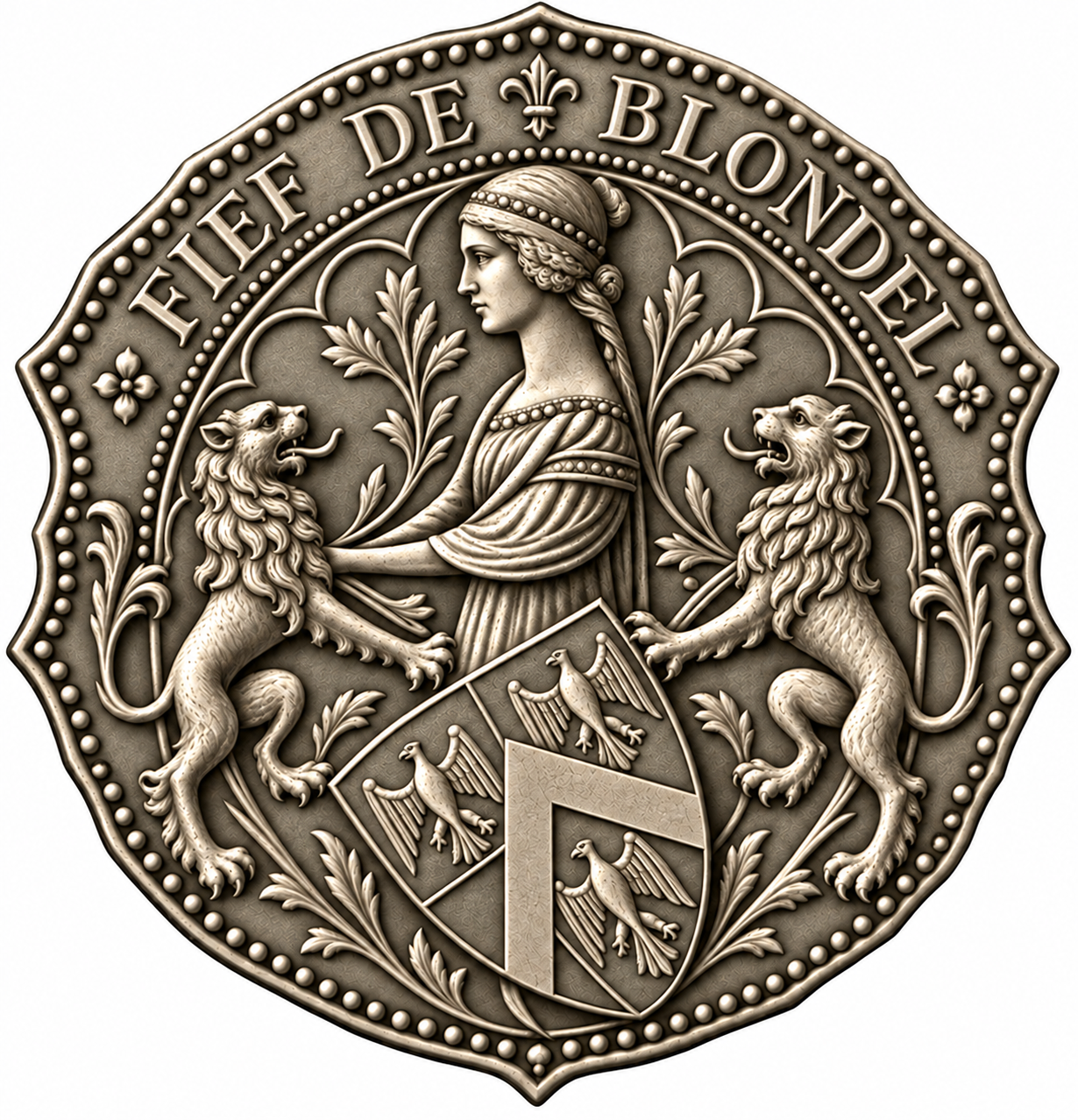
ANCIENT NORMANDY FIEF BLONDEL
A LEGAL FIEF OF THE CHANNEL ISLANDS - BAILIWICK OF GUERNSEY - A CROWN
DEPENDENCY OF THE DUKE OF NORMANDY ! A 1,000 Year Old Fief Tradition !
" THE SEIGNEUR OF FIEF THOMAS
BLONDEL
ET FIEF DE
L'EPERONS "Est. 1020AD
The Right Honourable Dr./Jur. George Mentz, JD MBA DSS,
Lord Chancellor, Seigneur of Fief Thomas Blondel - Normandy (Datuk Seri)
Greetings from the Ancient Lords, Dames and
Seigneurs of Private Fief Blondel - "Le Seigneurs de la Fief Thomas Blondel & Fief de L'Eperons including
Fief Bouvée Duquemin in Torteval
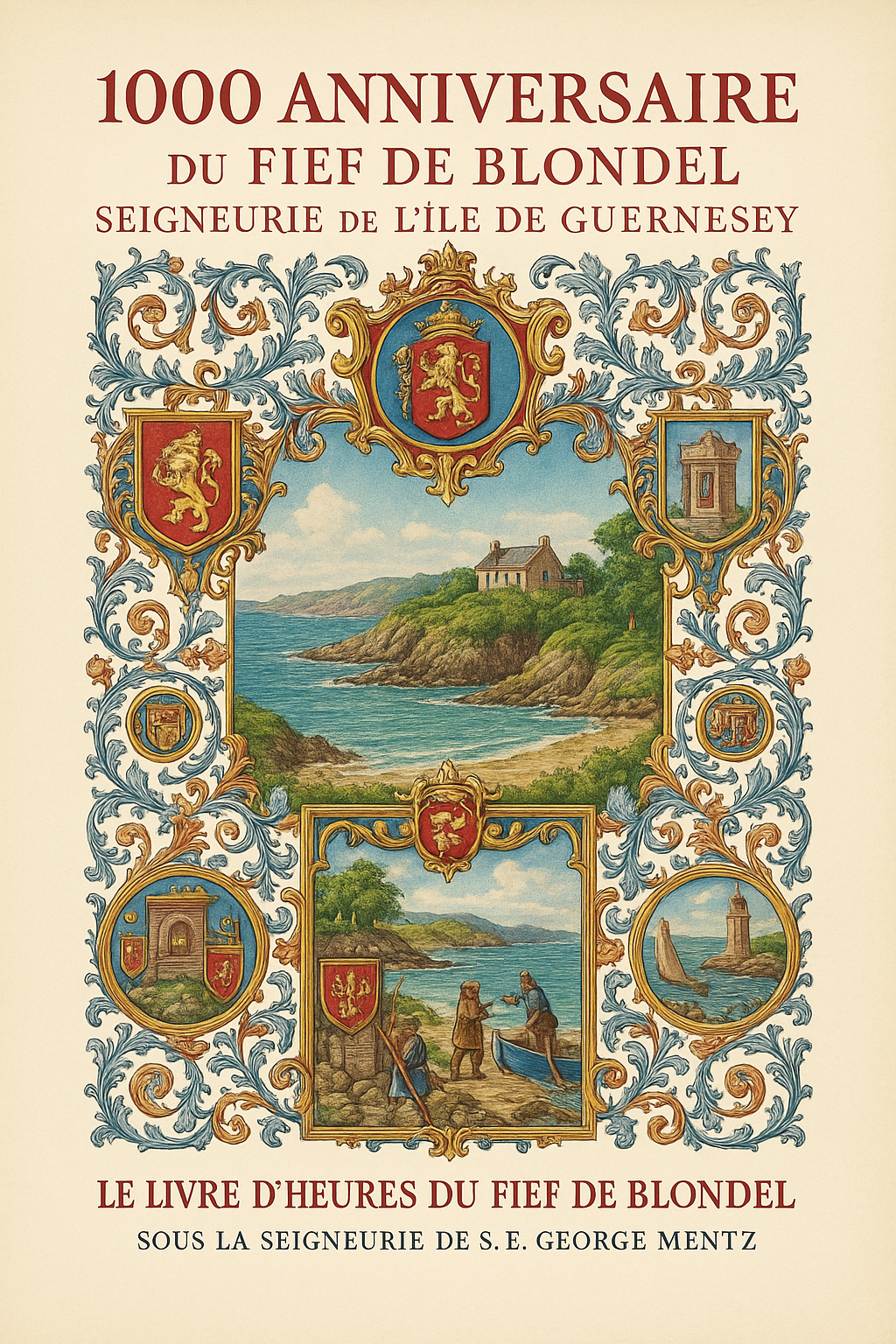
On July 16th 2024 - The Guernsey Feudal Lords paid
homage to King Charles III in French. We thank His majesty King Charles III for the Crown's
mutual recognitions. We would like to thank Lord Seigneur de Sausmarez for paying official homage
for all of the fiefs and Seigneurs and Dames of Guernsey in July 2024. This effectively allowed the
 Seigneurs and the King to acknowledge each others ancient legal rights
officially receiving or maintaining their Land Tenure Titles and Styles Directly from the
King. Sgr. De Sausmarez said: "I’ve
been very privileged to be chosen to represent all the Seigneurs en Chefs to do homage to His Majesty King
Charles. Seigneurs and the King to acknowledge each others ancient legal rights
officially receiving or maintaining their Land Tenure Titles and Styles Directly from the
King. Sgr. De Sausmarez said: "I’ve
been very privileged to be chosen to represent all the Seigneurs en Chefs to do homage to His Majesty King
Charles.
The Seigneur of Fief Blondel wishes King Charles
III "The Duke of Normandy" and the Queen a Great Thanks for visiting the people and Seigneurs and
Dames of Guernsey. King and Queen visit
Guernsey July 2024 | Guernsey Press
The Fief of Thom. Blondel is One of the Last Great Private Fiefs
[“a territorial fief held
by feudal tenure”] of Normandy registered directly with the
Crown's Royal Courts in Her Majesty's Crown Dependencies. This is one of the
last Fiefs in Europe to be privately owned with Beaches and Foreshores and Seasteds including international
anchorage and Waters.
Fiefs became well known during the Kingdom of the Franks with Carl the Great also known as
Charlemagne (crowned Emperor in 800 AD) With the partition of the Frankish Kingdom, West Francia became the home to
Normandy and Guernsey Channel Islands or "Îles de Normandie".
Fiefdom In
feudalism, a fiefdom (also called a fief, feud, feoff, or fee) was a property or right that an overlord,
seigneur or Lehnsherr (sometimes granted directly from a King or Queen) gave a vassal in exchange for fealty or
service. This property, of whatever size, could be inherited by the Lord's heirs.
Some Fiefs are Free Fiefs registered directly from the Sovereign such as this ancient Norman
Fief. The Lords of the Guernsey fiefs were originally all: "
liberi homines " and " franc-tenans ", free men, or free tenants. In other parts of Scandanivia,
Frankonia, Germania, the name is Free Lord, Free Tenant, or Feudal
Lord.
The Fief of Thomas Blondel, held of the
Crown in chief (in capite), belongs to the older Norman tradition of fiefs and seigneurial lordship, which
predates hereditary baronial titles; its Seigneur’s standing derives from that direct Crown tenure rather than from
a later baronial grant. A fief seigneur is a free lord which translates to Fri-herre in Norman and Scandanavian
history and nations.
Before the word Seigneur was used by the Norman Vikings of Normandy a 1000
years ago, they were using the terminology of Chief/hersir, Höfðingi or Chief Lord, Lendr Maðr (landed man or high
ranking man endowed with royal territory) , frjáls herra, or later Free Lord or Freherre, which then became
Seigneur. By the 12th century, Seigneur or seigneurie increasingly denotes the territory plus estate-plus-rights of
a lord.
The Feif
Blondel et L'Eperons is a fief tenu du Roi or Fief Direct of the King with defined land, territory and beaches.
Fief Blondel et l’Éperon is a Crown fief—held directly of the Sovereign. That makes its Seigneur a direct Crown
feudatory or tenant-in-chief. It is legally analogous in its directness of tenure to the relationship claimed
by imperial free lords in the Holy Roman Empire such as a Reichsfreiherrschaft or a Reichsfreiherr
dignity.
Friherre af Fief Blondel, Kanaløyer Est. 1179 -
"R.Frhr." or
"RFrhr."
History of the Viking Norman Seigneur &
Fiefdoms
481–843 Kingdom of the Franks
(Latin: Regnum Francorum), Frankish Kingdom, Frankland or Frankish Empire - Merovingian rise and decline, 481–687;
Clovis's sons; Chlothar; Francia split into Neustria, Austrasia, and Burgundy; Rule of Chlothar II; Dagobert I;
Dominance of the mayors of the palace, 687–751; Death of Pepin; Umayyad invasion; Carolingian empire, 751–840;
Divided empire, after 840
843–987AD - Kingdom of the
West Franks - The Channel Islands were held by Frankish Kings until Rollo the Viking conquered Normandy in
911AD
911AD - ROLLO the
VIKING - The Norse Channel Islands of France's Normandy were conquered by the Vikings before
911AD. As a concession to the invaders, Fiefs of the Channel Islands begin with the Grants by King Charles the
Simple. In 912, Charles the Simple, King of France, ceded to Rollo, the great Norwegian Viking Chieftain, the
province of Neustria, now called Normandy, and Rollo became the first duke of that province. On his baptism and
marriage with Gisele, daughter of Charles, he also received Brittany, for which Juhael Berengier, Earl of Rennes,
did him homage.
The Original Free Lords or FRHR of
Normandy - The earliest Norman lords were originally called Frhr. or Frjáls Herra, a
Norse‑Germanic expression meaning “free lord,” and as Normandy became Latinized under Christian and ducal
administration between c. 880 and 950 AD, Frjáls Herra evolved into the Latin legal formula
Dominus Liber, meaning “free lord,” which over time—once Latin gave way to Old Norman French in
the period c. 950–1000 AD—further developed into the feudal rank of Seigneur, defined not by
patent but by tenure, specifically holding land directly of the Duke or Crown.
The title of Seigneur pre-dated a baronial title in Normandy, and thus the Seigneur of a Fief of a landed Territory
or Tenure (Direct from the Crown) is equivalent in rank to a baron today in diplomatic protocols. Some fiefs today
are effectively a “territory-less” fief without real tenure and thus not the same rank as a Seigneur of a Fief
Territory direct from the Crown.
911AD.
The Great Viking Chief Rollo Göngu-Hrólfr or Gaange Rolf is first Seigneur of
Normandy. Chief Rollo was a Viking Warrior who became the first
ruler of Normandy, a region of France. He is sometimes called the 1st Duke of Normandy and speculations point to
Denmark as Rollo's birth place. Guernsey, second largest of the Channel Islands. It is 30 miles (48 km) west of
Normandy, France, and roughly triangular in shape. With Alderney, Sark, Herm, Jethou, and associated islets, it
forms the Bailiwick of Guernsey. The reigning Queen or King of England is still known as the "Duke of Normandy" to
all those in the Channel Islands. This fief was held directly from the Crown which would imply that the title
applying to the Fief Blondel during the Norman Age was Reichsfriherre. The common Holy Roman acronym for
"Reichsfreiherr" is "R.Frhr." or "RFrhr." for short.
During
the 9th century A.D., Norman invaders hailing from Scandinavia descended upon the northwestern shores of France.
Settling primarily along the lower reaches of the River Seine, they bestowed upon the region its enduring moniker:
Normandy, aptly named as the land of the Northmen. Through a series of conquests and raids, they gradually expanded
their sway, seizing Rouen in 841 and conducting further incursions along the Seine valley up to Paris. The
indigenous Franks found it challenging to stem the Norman tide, leading to a pivotal agreement in 911 between
Charles the 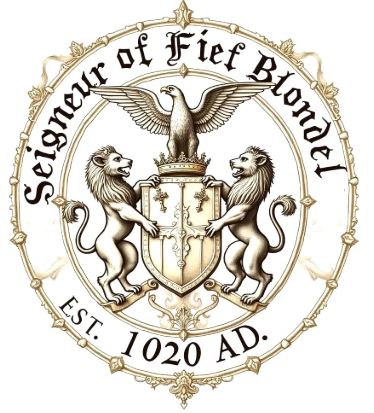 Simple, King of the West Franks, and Rollo, the Norman leader. This accord saw the King
relinquishing territory around Rouen to the Normans, recognizing Rollo as Duke of Normandy in exchange for
fealty. However, the Cotentin peninsula and the Channel Islands remained beyond Norman control until Rollo's
successor, William Longsword, integrated them into his domain in 933. Thereafter, the Channel Islands became
an integral part of the Duchy of Normandy, evidencing Norman administrative and legal influence that endured
through the ages. Ecclesiastically, the islands fell under the jurisdiction of the diocese of Coutances, while
legally, they constituted the domain of the Norman Dukes, who granted estates as fiefs to monasteries and
nobles. Simple, King of the West Franks, and Rollo, the Norman leader. This accord saw the King
relinquishing territory around Rouen to the Normans, recognizing Rollo as Duke of Normandy in exchange for
fealty. However, the Cotentin peninsula and the Channel Islands remained beyond Norman control until Rollo's
successor, William Longsword, integrated them into his domain in 933. Thereafter, the Channel Islands became
an integral part of the Duchy of Normandy, evidencing Norman administrative and legal influence that endured
through the ages. Ecclesiastically, the islands fell under the jurisdiction of the diocese of Coutances, while
legally, they constituted the domain of the Norman Dukes, who granted estates as fiefs to monasteries and
nobles.
933AD the islands were granted to William I Longsword by Rudolph, also known
as Rudolph of France or Rudolph I. He reigned from 923 to 936, the King of West Francia, and annexed to the Duchy
of Normandy
1020AD - The Fief de Blondel or Fiefdom of Thomas Blondel came about through
the medieval fragmentation of Fief Au Canelly and consequently, of the initial half of Guernésiais or Guernsey
given by Duke Richard II in 1020 to Neel, Vicomte of the Cotentin. (
Nigel de
Saint
-
Sauveur
, who held the
fief of de
Bessin in
Guernsey which includes Torteval and St. Peter in the Wood which Fief Blondel is in both)
Fief Blondel was part of Fief Canelly and Fief of the Cotentin
of Torteval and Fief of Bessin ( or Bayeux ) which was in St. Pierre-du-Bois, and Blondel was part of the Fief of
Ansquetil.. Thus, Blondel is one of the only fiefs which has territory in all of the great
fiefs.
The holders of the
property title of the Fief Blondel territory were Feudal Counts or Viscounts of Contentin and Bessin of which the
title was connected to the Land. The definition of a vicomte is a French nobleperson, ranked
just above a baron. This fief Blondel was held directly from the Crown which would imply that the title appying to
the Fief Blondel during the Norman Age was Reichsfriherre. The common Dane/Germanic acronym for "Reichsfreiherr" is
"R.Frhr." or "RFrhr." for short.
In 1066, William the Conqueror mandated Norman Feudal Tenure
into England and the Channel Islands and divided it up into 700+ baronies or fiefs. The Lord Barons were called
Seigneurs Normands who were part of the new Kingdom of William the Conqueror.
In 12th Century Kingdom of France, the term baronnie or Baron was generally
applied to all lords or seigneurs possessing an important fief from the King, but later in the
13th century the title of Baron meant that the holder
held his Fief directly from the Crown and was thus more important
than a Graf/Comte/Count since counts were typically vassals.
Several Knightly Orders were created - Order of the Genet 726AD - Order of the Star 1022AD - Order of the Thistle of Bourbon 1370AD. These three ancient Baronial Orders are still maintained by the Seigneur of Fief
Blondel
AD
1179 - We find Legal Reference of Lord Seigneur of Thomas Blondel, a noble fief, in a charter
of 1179AD when he is witnessing a grant to St. Michael's Mount. He is Robert Malmarchie (Thomas
Blondel).
1204
AD - Fief Blondel and other Ancient Fiefs were Forfeited to the Crown with separation of
Guernsey from France and Normandy and given to loyal Seigneurs and Dames who were Feudal Lords to the Sovereign of
the UK Crown.
1200's AD - The Parish of St. Andrew in which Thomas Blondel lies contained a
group of four late 12 century ecclesiastical Fiefs, one held by the Bishop of Countances, the second held by the
Abbot of Cormery, Tours, the third held by the Abbot of La Croix St. Lewfroy, Evreux, and the fourth held by the
Abbess of Trinity, Caen. The Fief Thomas Blondel derives its name, as we have already observed from the family
of
Malmarcher or Malmarchy who are
recorded in the charters as existing in Guernsey in the 12th Century. Today, The region of The Fief de Thomas Blondel lies in both St Pierre du Bois (St. Peter of the Wood) and of the Parish of Notre Dame de
Torteval along with the Blondel Dependency Fief de l'Eperon of
Torteval Parish of the Island of
Guernsey.
In 1270,
on the death of Sir Henry Le Canelly, the great Guernsey fief Fief Au
Canelly was divided between his daughters. Guilemette, the wife of Henry de Saint Martin obtained a
considerable part of the island originating the Fiefs of Janin Besnard, Jean du Gaillard, Guillot Justice and Fief
Thomas Blondel. This was confirmed by the tenants and officers of the Fief in letters patent issued by Guernsey's
Royal Court under the Bailiwick Seal in 1463. The original noble, Thomas Blondel was a jurat of Guernsey’s Royal
Court from 1421-45. The Blondel family has given several jurats to the island. Later the Columbines and Fiotts were
the holders of the title. For a time, the rights over the Fief were divided in two.
In 12th Century Kingdom of France, the term baronnie or Baron
was generally applied to all lords or seigneurs possessing an important fief, but later in the
13th century the title of Baron meant that the holder
held his Fief directly from the Crown and was thus more important
than a count since counts were typically vassals.
France Held Guernsey
1338-1345 - The islands were invaded by the French in 1338, who held some territory until
1345.
Edward III of England granted a Charter in July 1341 to Jersey, Guernsey, Sark
and Alderney, confirming their customs and laws to secure allegiance to the English
Crown.
1378 Guernsey Charter Liberties and Tax
Treatment - The young King Richard II of England reconfirmed in 1378 the Charter rights
granted by his grandfather, followed in 1394 with a second Charter granting, because of great loyalty shown to
the Crown, exemption for ever, from English tolls, customs and
duties
A 1440 Record of the Fiefdom Deed of the Fief of Thomas
Blondel which the deed is still at University Leeds, shows the parishes
of St Peter of the Wood and Torteval, Guernsey, made by Janet Blondel to Thomas de la Court. attested by Jean
Bonamy and Jacques Guille, jurats. According to the Deed, the Fief Blondel further
includes the: Fief Blondel territory in the parishes of St Pierre du Bois (St. Peter of the Wood) and of Notre Dame
de Torteval along with the Fief de l'Eperon of Torteval, the Bouvée Phlipot Pain, lying in the
said parish of St Pierre duBois, and the Bouvée Torquetil and Bouvée Bourgeon lying in the said parish of
Torteval.
SEE DIGITAL FIEF MAP
1848 - French Nobility and
Titles are eliminated while the Fief Seigneurs of Guernsey continue to exist under Ancient
British Norman Laws.
1919 - Nobility eliminated
in Germany and Austria. Since 1919 nobility is no longer legally recognized in Germany. Under
the Law on the Abolition of Nobility, Austria eliminated its noble classes in 1919. However in Guernsey, the
ancient property titles of Fief Seigneur or Free Lord of a Fief continued to exist.
A few of these Guernsey fiefs are still registered directly with
the Crown where a treizième or conge was paid in Royal Court to Her Majesty. A lawyer must be hired to
register the fief in French. Conge is
part of the feudal past when a due (representing one thirteenth of the property price) was charged on the property
changing hands and was paid to the Seigneur of the fief upon which the property sat. It remains due and payable to
the Receiver General in respect of the conveyance of fiefs. The owners of Fiefs maintain the legal right to be styled with the ancient title
of: Seigneur or Dame.
Today, there are roughly only 24 private lords left in
Guernsey totaling 46 fief lordships surviving in this ancient feudal system , except
that two of these 46 seigneuries are indivision between several owners. It appears that only 15 or so
Private Fiefs own Beachfront, Foreshore and Maritime Rights. These may be the last privately
owned maritime port Fiefs in the world.
In the case of the Fief Blondel, the fee was paid by the
Seigneur of Fief Blondel directly to the Crown of the United Kingdom. There may be only a few legally recognized
feudal fiefs in the world left at this time which are legally allowed or directly registered with a Sovereign King
or Queen.
The Noble Fief of Blondel is one of the island's few
"private fiefs" or" feudal titles" not held by the King and Queen.
The Feudal Lord's of Blondel - Approx. Chronology of
Free-Lords who Held the Norman Title.
1st Count of Normandy -The Viking Seigneur Duke
Rollo 911AD
( C
omes Normanniae
) - Feudal Duke & Lord - Great Viking Chief Rollo
Göngu-Hrólfr or Gaange Rolf - Le Seigneur of the Noble Fief including Fief Blondel a Norman
Freeholder Lord of property, region, and land rights over small palatinates. Also known in Northern, Viking, & Scandanavian Countries as: Free Lord
- Friherre - The Fief Thomas Blondel
2nd
Seigneur - 933AD - Seigneur Ranulf Fitz Anhetil & Duke
Robert the Magnificent -As far as Guernsey is
concerned, Seigneur Ranulf Fitz Anhetil, Viscount of Bessin,
was part of the Norman Court of Duke Robert the Magnificent [an heir of Rollo] when the latter took possession of
the Channel Islands in 933. Anhetil was appointed to rule over the northern fief in Guernsey comprising the
parishes of the Vale, Catel, St. Saviour and St. Pierre du Bois.
3rd
Seigneur 1032
AD - Seigneur Monastery of Mont St. Michel -
In 1032 this fief was passed over to the Monastery of Mont St. Michel but was restored to
the
4th Seigneur
1042 - Viscount Ranulf de Briquessart, in 1042.
5th Seigneur and
Duke - William, Duke of Normandy
1066
(Viscount or C
omes Normanniae
)
6th Seigneur or Count - Vicomte de
Cotentin - Néel de Saint-Sauveur was also known as: (Niel, Nigel) II (III) de Saint-Saveur,
Vicomte de Cotentin born in 1016 and died around 1073.
7th Seigneur of Blondel - Geoffrey Count of Anjou - Geoffrey Plantagenet and Princess Mitilda 1145-1150 -
According to Seigneur Lenfesty, Count Anjou granted the guernsey fiefs the title or status of "Free Tenants" or
Free Lords which have the status of Barons when baron titles were later introduced.
8th Seigneur - Abbots
of the Famous Mont St. Michel
9th Seigneur- King John Duke of Normandy
- 1204/5AD - Separation of Guernsey from Normandy, The loss of Normandy by
King John in 1204 isolated the Channel Islands from mainland Europe where up to today, Guernsey is an
independent crown dependency. Self governing but loyal to the Crown of England
10th Seigneur - King Henry 1254 AD -
11th Seigneur Edward I - In 1254 Henry granted the Islands to his son, the future Edward I, but at the same
time stipulated that the Islands were never to be separated from the English Crown.
12th Seigneur of the Fief Blondel and
(Feudal-Free-Lord) The Family Le Canelly until
1270 - Fief Blondel and other Fiefs are Forfeited to the Crown
with separation from Normandy and given to loyal Seigneurs and Dames.
13th Seigneur or Dames - In
1270AD , on the death of
Sir Henry Le Canelly, the large Guernsey fief "Fief Au
Canelly" or 'Le Kenele' was divided between his daughters. Guilemette, the wife of
de Saint Martin obtained a considerable part of the island which
originated the fiefs of Janin Besnard, Jean du Gaillard, Guillot Justice and Thomas
Blondel.
The Assize Rolls of 1309 and 1320, and a deed at Warwick Castle throw light on
this last entry, as they show that Drouet de St Martin had married Dame Guilemette, and Thomas de
Vic, Dame Lucie, daughters and co-heiresses of Sir Henry Le Canelly, Knight, Seigneur of Le Canelly, an important Guernsey manor which stretched over part of
the parishes of Torteval, St Peter-in-the-Wood and St Saviour.
At the Assizes held in Guernsey, 1309, The de St Martin brothers declared that
Henry de St Martin and Avice de Vic held the inheritance of 'Le Kenele' or Fief Cannely between them in the
parishes of Torteval and St Peter-in-the-Wood, suit of court, the right of chase and court of their tenants.
This inheritance passed in moiety to the Fief Blondel and other fiefs within Fief Cannely
14th Seigneur of Fief Blondel -
Sir William De Chesney 1284- Sir William De
Chesney
is named as the Seigneur of the Fief Thomas Blondel
in 1284 AD which is 740 years
ago
that this noble feudal fief has existed under the direct relationship with the Crown of
England.
15th Lord Seigneur - Thomas Blondel 1421-1440 and
later Le Dame Janet Blondel and Blondel
Family until 1440. Thomas Blondel was born in 1422 in Guernsey. His father was Guillaume Blondel, of La
Perelle. Thomas Blondel's son Nicholas BLONDEL is listed in some websites as the Seigneur of: (Fief Thos.
Blondel of Fief Canelly). A John Blondel was bailiff of Guernsey in 1483.
16th 1440 - Seigneur of Fief Blondel -
Sieur Thomas De La Court under the protection of Prince & Duke of Gloucester, Lord of the Islands at
the time. Seigneur De La Court purchased: fief
Thomas Blondel and Fiefs de l'Eperon lying in the said parish of Torteval and likewise all and such
seigneuries, dignities, liberties, graces and franchises as to the aforesaid fiefs and each of them attach and
belong with a certain dinner which the said Jenete takes and owns annually for an estate of inheritance, she
claims, on the fief of the Prior of Lihou. De La Court was the Bailiff of the
Island 2 times.
1481 - Papal Bull in 1481 directed against attacks on the islanders that had the effect, beneficial to trade, of
making Guernsey protected by the Vatican .
17th 1595 Lord Dame Marie de La
Court
18th Seigneur of Fief Blondel -
George S. Le Couteur Freeholder-Feudal-Lord &
Friherre/Freiherr) , Seigneur of Fief Thomas Blondel
19th 1644 Lord Seigneur
Guilliume De Beauvoir and heirs
Pierre Beauvoir and Pierre Fiott
20th 1775 - Seigneur Thomas de
Guille
21st Lord Seigneurs or Freeholder-Feudal-Lord &
Friherre or Freiherr) Seigneur Daniel Hardy & Le Dame Marie
Guille in the 1700's until year 1800.
22nd Lord - Seigneur Pierre Robillard of Maison de
Pleinmont, Torteval, was the Seigneur of Fief de Thomas Blondel. The rights over the Fief again joined during
the XIX century as shown in documents of 11/10/1800 (Reg Tome 26, p 420) and 19/05/1798 - Pierre Robilliard
obtained the Fief from Daniel Hardy & Marie Guille. 1800
"Monsieur Pierre Robilliard, Seigneur des fiefs Thomas Blondel, Guillot Justice, Bouvee du Quemin, et fief La Cour
Ricard
23rd Seigneur 1901 - Nicholas Le
Huray of Pleinmont
24th Seigneur - Mr. George S. Le Couteur
1921 bought and became Seigneur of fief
Thomas Blondel. Some other minor fiefs may have remained to Dame Mary Robilliard, wife of M. Le
P. Coquierre, and so passed to their daughter, Miss Le Coquierre.
German Socialist
Empire - Fief Blondel, Guernsey, occupied by Military
WarLords of Germany, 1940-1945.
25th Seigneur ( Count Julio Emilio Marco Franco of
Spain ) The rights of Fief Thomas Blondel acquired from Le Couteur Family by (Count & Seigneur Dr. Marcov of Spain)
from Sept. 2000 until December of 2017.
26th Free
Lord & Seigneur - Commissioner & Counselor Dr./Jur George Mentz JD MBA, KSG, D.M.S.M.K.D., Seigneur of Fief of Blondel et L'Eperons ) on the island
of (Dgèrnésiais - Guernsey French)
in Dec.
2017, the rights of the Private Fief of Thomas Blondel were acquired by George Mentz,
Esq of the United States. Acquired by conveyance and payment of: Duty, Treizième & Congé, and Jurats
fee, and Fief Permission Fees to the HM/Crown and Receiver General, HM Clerk Greffier and Courts
** Mentz is an international advocate lawyer who
studied 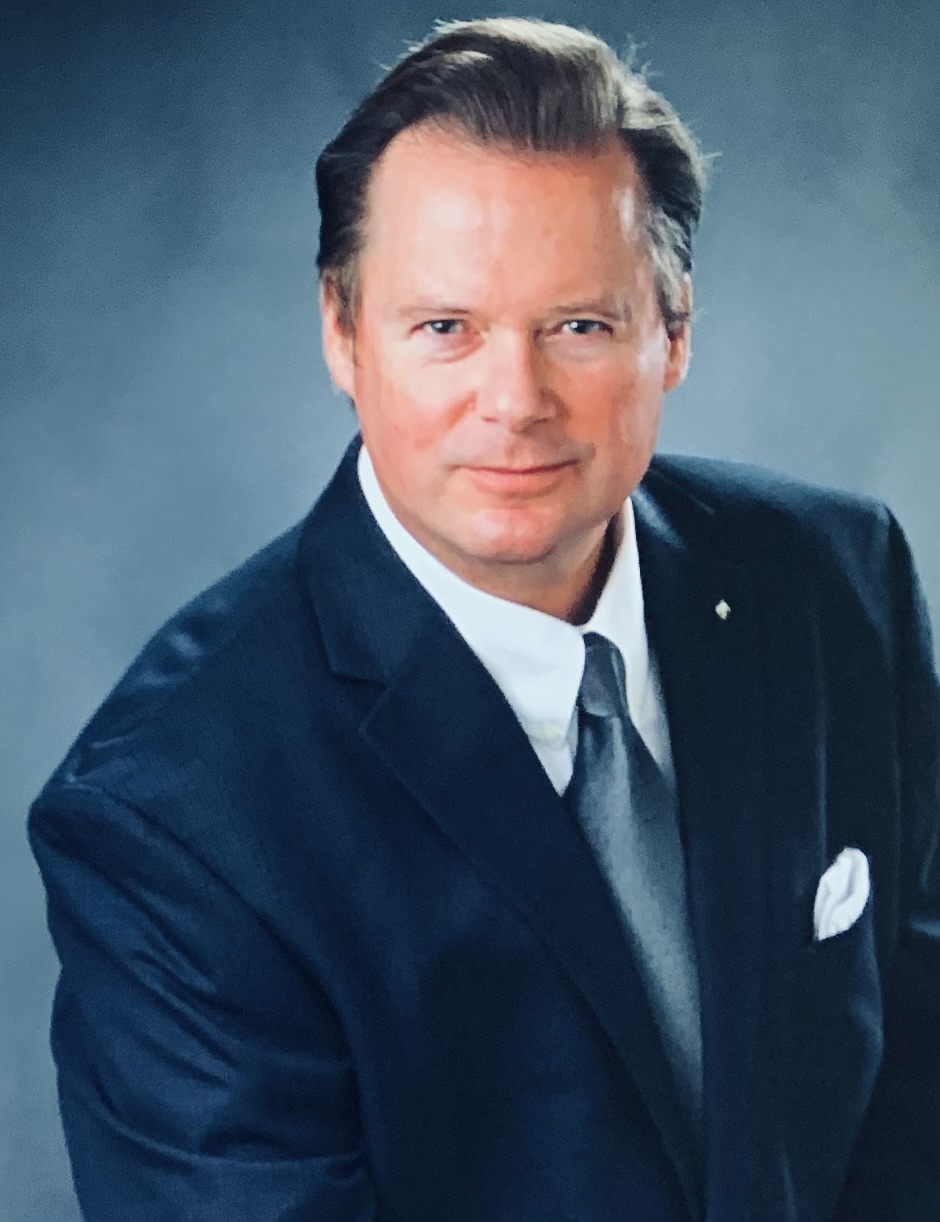 Common, Civil and French/Latin Law who has a keen interest in maintaining the Feudal
Courts of the Fief Blondel because it is one of the oldest feudal courts in the
world. Mentz is also the titular feudal Lord Baron of Ancient
Longford-Westmeath in Ireland through acquisition from the original sale from Earl and Lord
Westmeath. The Seigneur of the Fief of Thomas Blondel also holds the ancient Fief of Spurs
or The Fief à Eperon as a dependency. George Mentz, Seigneur of
Fief de Blondel (A Norman Fief) is a direct descendant of William the Conqueror and Rollo the Viking, 1st
Duke of Normandy. Mentz traces his roots from the McConnells to the Flemings, Ker, Drummond Campbell and
Stewart Families. From there up to the Kings and Queens of England to the Plantagenets. George Mentz
is also a direct descendent of Henry V The Blondell (1216 – 24 December 1281) The Count of
Luxembourg - The Counts of Luxembourg are descendents of the Count of Arlon and Dukes of
Limburg which was a dynasty in present day Belgium and Luxembourg. Common, Civil and French/Latin Law who has a keen interest in maintaining the Feudal
Courts of the Fief Blondel because it is one of the oldest feudal courts in the
world. Mentz is also the titular feudal Lord Baron of Ancient
Longford-Westmeath in Ireland through acquisition from the original sale from Earl and Lord
Westmeath. The Seigneur of the Fief of Thomas Blondel also holds the ancient Fief of Spurs
or The Fief à Eperon as a dependency. George Mentz, Seigneur of
Fief de Blondel (A Norman Fief) is a direct descendant of William the Conqueror and Rollo the Viking, 1st
Duke of Normandy. Mentz traces his roots from the McConnells to the Flemings, Ker, Drummond Campbell and
Stewart Families. From there up to the Kings and Queens of England to the Plantagenets. George Mentz
is also a direct descendent of Henry V The Blondell (1216 – 24 December 1281) The Count of
Luxembourg - The Counts of Luxembourg are descendents of the Count of Arlon and Dukes of
Limburg which was a dynasty in present day Belgium and Luxembourg. Sgr. Mentz
presently serves 2025 as the The Right Honourable George Mentz, Lord Chancellor of the Anglican Orthodox
Church of Africa (WAC)
Mentz is The Last American Seigneur
™ International
Advocate.
The Seigneury of the Fief of Blondel historically over the last 700 years
contains about seven bouvées of
land called the Bouvée Phlipot Pain, lying in the said parish of St Pierre duBois, and the bouvées Torquetil and Bourgeon along with the Fief de l'Eperon lying in the
said parish of Torteval and likewise all and such seigneuries,
dignities, liberties, graces and franchises as to the aforesaid fiefs
and each of them attach and belong with a certain dinner annually supplied by the fief of
the Prior of Lihou.
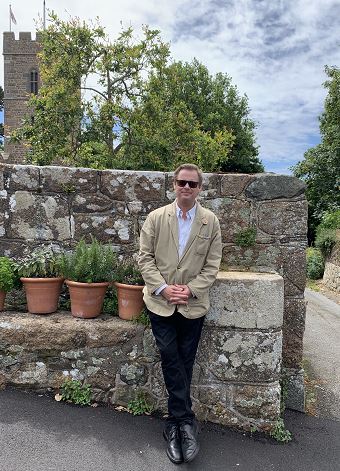
Commissioner Mentz, Seigneur of Fief Blondel et Eperons at the Steps of the Fief Court at the Church
of St. Pierre Du Bois or St. Peter in the Wood - Mentz is the Lord Chancellor of the WAC
Worldwide Anglican Church ( Anglican Orthodox Church )
2017 to Present Day - The Government's Court of
Chief
Pleas is an ancient Court and is constituted in the
same way as a Full Court. Nowadays it will typically sit only once per year. It is attended by the Full Court, the
Law Officers of the Crown, Advocates and the Fief Seigneurs and Bordiers owing suit to the Court. The Feudal Lords
of the Fief are recognized directly by registration with the crown and royal courts. Many esteemed lawyers and
officers are in attendance each year at Michaelmas which is a Christian festival observed in some Western
liturgical calendars on 29 September. In some denominations a reference to a fourth angel, usually Uriel, is also
added. Michaelmas has been one of the four quarter days of the financial, judicial, and academic year. Michaelmas
annual Court in Guernsey is usually on the first Monday of October accompanied by government meetings, roll calls,
traditional march parade, and dinner of legal, governmental, and feudal dignitaries. Mentz has attended the Court
of Chief Pleas as an International Dignatary.
Knights of the Genet KG
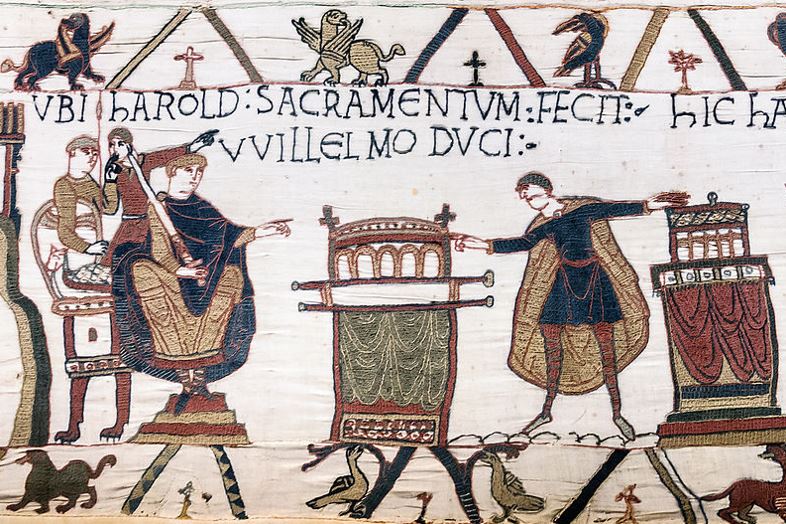
|
óðalsbóndi |
allodial or ancestral-land owner, |
|